Two-Phase Orthodontic Treatment in Chapel Hill, NC
Clifton & Mauney offers two-phase orthodontic treatment for children in Chapel Hill, NC. Two-phase treatment is used for intervention while children are still growing to address developmental issues related to spacing and/or alignment. This child-focused approach may include Phase I orthodontic treatment, a resting or monitoring period, and Phase II braces or aligners when more permanent teeth have erupted.
Not every child needs two rounds of braces. In many cases, a child may only need growth monitoring or one comprehensive orthodontic phase later. At Clifton & Mauney, early treatment is recommended when it may create a clear benefit for jaw growth, tooth eruption, bite correction, spacing, or future treatment predictability.
Our Chapel Hill office serves families from Chapel Hill, Carrboro, Durham, Hillsborough, Orange County, Durham County, and nearby communities. If your child is around age 7 or you have concerns about crowding, spacing, bite alignment, jaw growth, or blocked permanent teeth, we can help you understand what is happening and what comes next.
Table of Contents

Does my child need two-phase orthodontic treatment?
Not every child needs two-phase orthodontic treatment. This is one of the most important things parents should know before starting early orthodontic care.
Many children benefit from simple monitoring until more permanent teeth erupt. Others may only need one full phase of braces or clear aligners during the teen years. Two-phase treatment is usually considered when early orthodontic intervention may help guide growth, create space, correct a developing bite issue, or support the eruption of permanent teeth while a child is still growing.
Two-phase treatment may be recommended when a child has concerns such as:
- A crossbite or underbite
- Severe crowding
- A narrow upper jaw
- Protruding front teeth
- Blocked or impacted permanent teeth
- Jaw growth concerns
- Open bite or deep bite
- Oral habits that are affecting tooth or jaw development
- Early or late loss of baby teeth
At Clifton & Mauney, the goal is not to start treatment early just because a child is young. The goal is to determine whether early treatment may provide a clear benefit. If your child does not need Phase I orthodontics yet, our team may recommend monitoring growth and development until the timing is right.
What is two-phase orthodontic treatment?
Two-phase orthodontic treatment is a child orthodontic approach that happens in stages. It is designed around a child’s growth, dental development, bite, spacing, and tooth eruption pattern.
The three main parts are:
- Phase I treatment while some baby teeth are still present
- A resting or monitoring period while permanent teeth continue to erupt
- Phase II treatment when more permanent teeth are in place
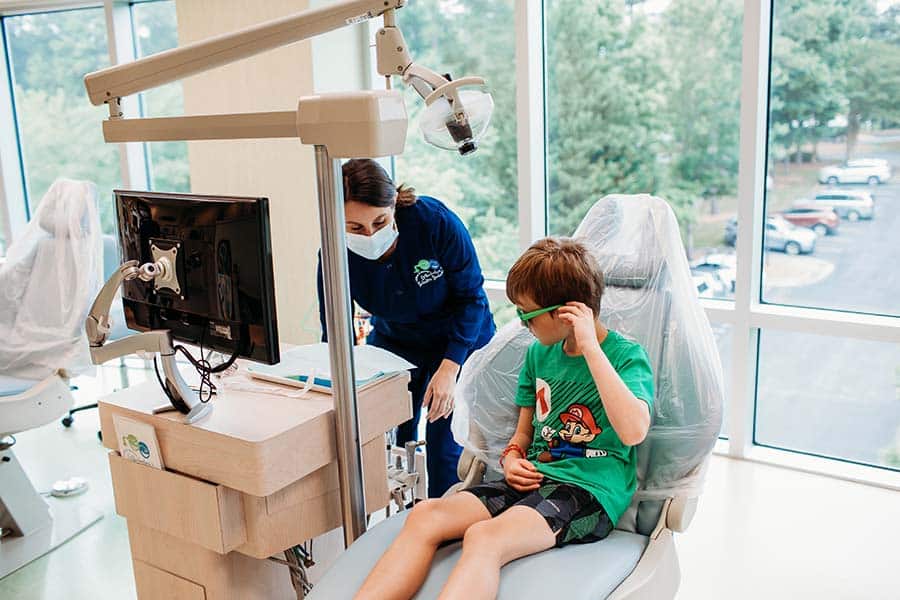
The American Association of Orthodontists describes two-phase treatment as care that happens at two different times and is timed to a child’s growth and dental development.1 It may be used when early changes can improve function, reduce the risk of future problems, or make later treatment more predictable.
| Stage | Typical timing | Main goal | Common appliances or options |
|---|---|---|---|
| Phase I treatment | Usually ages 6–10, while some baby teeth are still present | Guide growth, create space, correct developing bite issues, or support tooth eruption | Palatal expander, partial braces, space maintainer, habit appliance, retainer, limited aligner therapy if appropriate |
| Resting / monitoring period | After Phase I, while more permanent teeth erupt | Monitor growth and eruption without continuous active treatment | Retainer, space maintenance, growth checks, eruption monitoring |
| Phase II treatment | Usually when most or all permanent teeth are in place | Align permanent teeth, refine the bite, and support a healthy, functional smile | Braces, Damon braces, clear aligners, Invisalign, Spark Aligners, retainers |
Why orthodontists recommend an evaluation around age 7
The American Association of Orthodontists recommends that children have their first orthodontic checkup around age 7. By this age, a child usually has a mix of baby teeth and permanent teeth, which can allow an orthodontist to identify developing issues with jaw growth, bite alignment, spacing, and tooth eruption.2
An age-7 orthodontic evaluation does not mean your child will need braces right away. In fact, many children are simply monitored until more permanent teeth come in. The purpose of the visit is to understand whether a problem is developing and whether early orthodontic treatment may help.
During an age-7 evaluation, an orthodontist may look for:

- Crossbite
- Underbite
- Crowding
- Spacing
- Protruding front teeth
- Delayed or early tooth loss
- Impacted or blocked teeth
- Jaw shifting
- Oral habits such as thumb sucking
- Bite concerns that may affect chewing, speech, or growth
For families already visiting Clifton & Mauney for pediatric dental care, orthodontic monitoring can be coordinated in the same Chapel Hill office. This helps parents stay informed without having to manage disconnected dental and orthodontic care.
Signs your child may benefit from an early orthodontic evaluation
Some orthodontic concerns are easier for parents to spot than others. If you notice changes in your child’s bite, spacing, jaw movement, or tooth eruption, an early orthodontic evaluation may help you understand whether monitoring or treatment is appropriate.
These signs do not always mean your child needs Phase I orthodontics. They do mean it may be worth having an orthodontist evaluate your child’s growth, bite, and tooth eruption pattern.
Signs your child may benefit from an early orthodontic evaluation include:
Problems Phase I orthodontics may help correct
Phase I orthodontics may help address certain problems while a child is still growing. When appropriate, early orthodontic treatment can sometimes make future treatment simpler, more predictable, or better timed.
Phase I treatment may help with:
Crossbite
A crossbite happens when upper and lower teeth do not fit together properly. Early treatment may help guide jaw growth or improve bite function in some children.
Underbite
An underbite occurs when the lower teeth or jaw sit ahead of the upper teeth or jaw. Phase I care may help guide bite development when treatment is timed appropriately.
Severe crowding
Crowding can occur when there is not enough room for permanent teeth to erupt. Early space management may help reduce the risk of blocked teeth or improve future treatment planning.
Narrow upper jaw
A narrow upper jaw may contribute to crossbite, crowding, or bite imbalance. A palatal expander may be recommended in some cases to help widen the upper arch while a child is still growing.
Protruding front teeth
Front teeth that stick out significantly may be more vulnerable to injury. Early orthodontic care may help reduce protrusion when clinically appropriate.
Oral habits
Thumb sucking, finger sucking, tongue thrusting, or similar habits may affect bite development. A habit appliance or guidance plan may help when a habit is contributing to orthodontic concerns.
Blocked or impacted teeth
Some permanent teeth may not have enough space to come in correctly. Early monitoring or intervention may help guide eruption or create space.
Abnormal jaw growth
When jaw growth appears uneven or misaligned, an orthodontist may recommend monitoring or early treatment to guide development when appropriate.
What happens during Phase I orthodontic treatment?
Phase I orthodontic treatment is customized to your child’s growth, bite, spacing, and eruption pattern. It is not intended to create the final smile on its own. Instead, Phase I treatment may help create a healthier foundation for permanent teeth and future orthodontic care when needed.
Depending on your child’s needs, Phase I treatment may include:
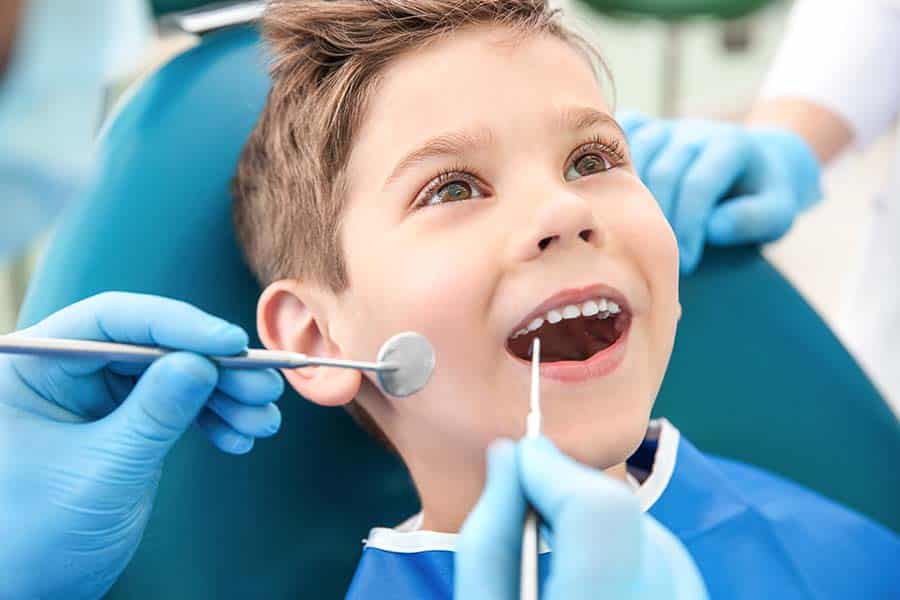
A palatal expander may be used when the upper jaw is narrow or a child has certain bite or space concerns. Partial braces may be used to align specific teeth or help guide eruption. A space maintainer may be used if a baby tooth is lost early and space needs to be preserved for the permanent tooth.
Phase I treatment length varies. Some children may need only a short period of active care, while others may need a longer treatment plan depending on the issue being corrected. The Clifton & Mauney team will explain what is recommended, why it may help, and what parents can expect before treatment begins.
What is the resting period between Phase I and Phase II?
The resting period is the time between Phase I and Phase II treatment. This is an important part of two-phase orthodontic treatment because it helps parents understand that treatment does not usually mean nonstop braces for years.
After Phase I treatment, active orthodontic care often pauses while more permanent teeth erupt. During this period, your child may wear a retainer or another appliance to help maintain progress. They will also return for periodic checks so the orthodontist can monitor growth, bite development, and tooth eruption.
The resting period will include:
- Retainer checks
- Growth monitoring
- Tooth eruption monitoring
- Space maintenance
- Updates to the future Phase II plan if needed
- Parent education about what to watch for
Some children may still need Phase II treatment later. Others may need less complex treatment because Phase I helped create a better foundation. Your child’s orthodontist will continue evaluating timing and readiness as your child grows.
What happens during Phase II orthodontic treatment?
Phase II orthodontic treatment usually begins after most or all permanent teeth have erupted. This stage focuses on aligning the permanent teeth, refining the bite, improving function, and supporting a healthy smile. Phase II may involve:
Braces
Damon braces
Clear aligners
Invisalign
Spark Aligners
Retainers
after active treatment
The right option depends on your child’s age, bite needs, tooth position, appliance compliance, growth pattern, and clinical fit. Some children may be good candidates for clear aligners, while others may benefit more from braces or Damon braces.
How much does two-phase orthodontic treatment cost in Chapel Hill, NC?
The cost of two-phase orthodontic treatment depends on several factors, including your child’s needs, the appliances used, the length of treatment, whether Phase II is needed later, insurance coverage, and payment arrangements.
Because two-phase treatment is personalized, Clifton & Mauney will provide a clear estimate after your child’s orthodontic evaluation. Parents should understand what is recommended, what each phase may involve, and how payment options for orthodontist services or insurance benefits may apply before making a decision.
Factors that may affect cost include:
- Whether your child needs Phase I treatment or monitoring only
- Type of appliance used
- Treatment length
- Complexity of the bite or spacing concern
- Need for Phase II treatment later
- Insurance coverage
- Payment plan options
Why choose Clifton & Mauney for two-phase orthodontics?
Parents want clear answers, conservative recommendations, and a team they can trust with their child’s smile. Clifton & Mauney combines pediatric dentistry and orthodontics in one Chapel Hill office, making it easier for families to coordinate care as a child grows.
Families choose Clifton & Mauney for two-phase orthodontics because of:
Coordinated pediatric dentistry and orthodontics
Children can receive pediatric dental care and orthodontic monitoring in one familiar Chapel Hill office.
Conservative recommendations
The team may recommend monitoring when early treatment is not needed yet. The goal is to treat at the right time, not simply the earliest time.
Child-focused care
The practice is designed for children, teens, and families, with a team that understands how to explain treatment in parent-friendly and kid-friendly ways.
Orthodontic and pediatric dental experience
Dr. Clifton’s orthodontic and pediatric dental background helps support integrated care for growing smiles. Meet our orthodontist so you can learn more about her and her background.
Long-standing local presence
Why choose Clifton & Mauney? Clifton & Mauney has served families in the Research Triangle for more than 25 years. Read testimonials from community members about their experiences with our staff.
Personalized treatment timing
Each recommendation is based on the child’s growth, bite, eruption pattern, and long-term orthodontic needs.
Dedicated, professional expert orthodontist
At Clifton & Mauney, your child’s orthodontic care is guided by a team that understands both clinical development and the family experience. Our doctors and staff work with parents to explain each recommendation clearly, answer questions, and help children feel comfortable at every visit.



Before and after two-phase treatment: Real results from real people
Proudly serving Chapel Hill, Carrboro, Durham and Hillsborough families
Clifton & Mauney provides two-phase orthodontic treatment and child orthodontic evaluations from our Chapel Hill office. We proudly serve areas across Orange County, Durham County, and surrounding Research Triangle communities.
Nearby communities we serve include:
- Chapel Hill
- Carrboro
- Durham
- Hillsborough
- Orange County
- Durham County
- Families near I-40
- Families near local schools, neighborhoods, and family-centered communities throughout the Chapel Hill area
Our office location makes it convenient for families who want coordinated pediatric dental and orthodontic care close to home.

Schedule an orthodontic consultation in Chapel Hill, NC
If your child has crowding, spacing, a crossbite, underbite, mouth breathing, thumb sucking, blocked permanent teeth, or jaw growth concerns, an orthodontic evaluation can help you understand what is happening and whether treatment is needed.
Clifton & Mauney offers two-phase orthodontic treatment for children, age-7 evaluations, conservative recommendations, Phase I and Phase II guidance, coordinated pediatric dental and orthodontic care, and a convenient Chapel Hill location for families across Orange and Durham counties.
Scheduling an evaluation does not mean your child will need treatment right away. It simply gives you clear information, an expert recommendation, and a plan for the right timing.
FAQs about two-phase orthodontic treatment
Phase I orthodontic treatment length varies based on the child’s needs, growth, bite, and appliance type. Many Phase I plans may last several months to a little over a year, but your child’s orthodontist will provide a more specific timeline after the evaluation.
Appointment frequency depends on the appliance and treatment plan. Some children may need visits every few weeks, while others may have longer intervals between checks. The team will explain the expected schedule before treatment begins.
Phase I treatment should not be painful, but children may feel pressure, tightness, or mild soreness after an appliance is placed or adjusted. This discomfort is usually temporary and can often be managed with soft foods and guidance from the orthodontic team.
Yes, most children can continue playing sports during orthodontic treatment. A mouthguard may be recommended to help protect the teeth, braces, lips, cheeks, and appliances during contact sports.
Many children can continue playing an instrument during orthodontic treatment. There may be an adjustment period, especially with braces or an expander, but most children adapt with practice and support.
Your child may need to avoid sticky, hard, crunchy, or chewy foods that can damage braces or appliances. Examples may include gum, hard candy, caramel, popcorn kernels, ice, and very hard chips or nuts.
Children should brush carefully around brackets, wires, expanders, and gumlines. Floss threaders, interdental brushes, water flossers, or other tools may help. The Clifton & Mauney team can show your child how to clean around their specific appliance.
Call the office for guidance. If your child is in pain or something is poking the cheek or gums, the team can explain what to do until you are seen. Avoid trying to force or repair an appliance at home unless instructed by the orthodontic team.
No. Age 7 is a recommended first checkup age, but children, teens, and adults can still benefit from orthodontic evaluations. If your child is older than 7, an orthodontist can still assess tooth eruption, bite alignment, jaw growth, and treatment timing.
No. Phase I treatment does not guarantee that a child will avoid extractions, jaw surgery, or Phase II treatment. When appropriate, early treatment may help guide growth, create space, or make future treatment more predictable, but every child’s needs are different.
Sources
- American Association of Orthodontists. “What Is Two-Phase Orthodontic Treatment?” American Association of Orthodontists. Accessed June 10, 2026.
- American Association of Orthodontists. “Child Orthodontics: Pediatric Braces & Early Treatment.” American Association of Orthodontists. Accessed June 10, 2026.