
Pediatric Dentistry in Chapel Hill, NC
Clifton & Mauney Orthodontics & Pediatric Dentistry provides pediatric dental care for children at our office in Chapel Hill, NC. We’re conveniently located to serve families across the Triangle, including in Durham and Hillsborough. Led by board-certified pediatric dentists, our team offers preventive care, dental sealants, age-one visits, restorative treatment, and emergency services in a warm setting designed around children and families.
Local, board-certified pediatric dentists
First-visit appointments available
Accommodations for children with special needs
Preventive and emergency services
What Is Pediatric Dentistry?
Pediatric dentists provide dental and oral healthcare services for children and adolescents. In order to earn a pediatric dentistry certification, a dentist must complete a specialized residency program (usually around two years) after earning their degree. The pediatric dentists at Clifton & Mauney, Dr. Chuck and Dr. Nash, are both Diplomates with the American Academy of Pediatric Dentistry. Earning Diplomate status showcases specialized expertise and a commitment to lifelong learning.
Meet Our Pediatric Team


Pediatric Dental Care Services
Taking a comprehensive approach to your child’s dental care ensures that we can create a foundation of healthy teeth and good oral habits. We offer a range of treatments for common pediatric dental conditions, including regular dental checkups, dental sealants, restorative care, early orthodontic intervention, diagnostic X-rays, and more.

Infant Dental Visits
You should schedule an appointment with Dr. Chuck or Dr. Nash as soon as your child’s first tooth comes in! Sometimes this is before their first birthday. Meeting with a pediatric dentist at this stage is the best way to set your child up for a lifetime of healthy smiles.

Preventive dentistry
Preventive care protects your child’s smile from tooth decay, gum disease, and other damage. Scheduling regular cleanings helps us keep your child’s teeth bright and healthy. Prevention efforts also include establishing proper brushing and flossing techniques, education on diet choices and the relationship between food and cavities, and teaching you how to protect your child’s teeth from trauma at all ages of childhood.
X-rays & radiographs
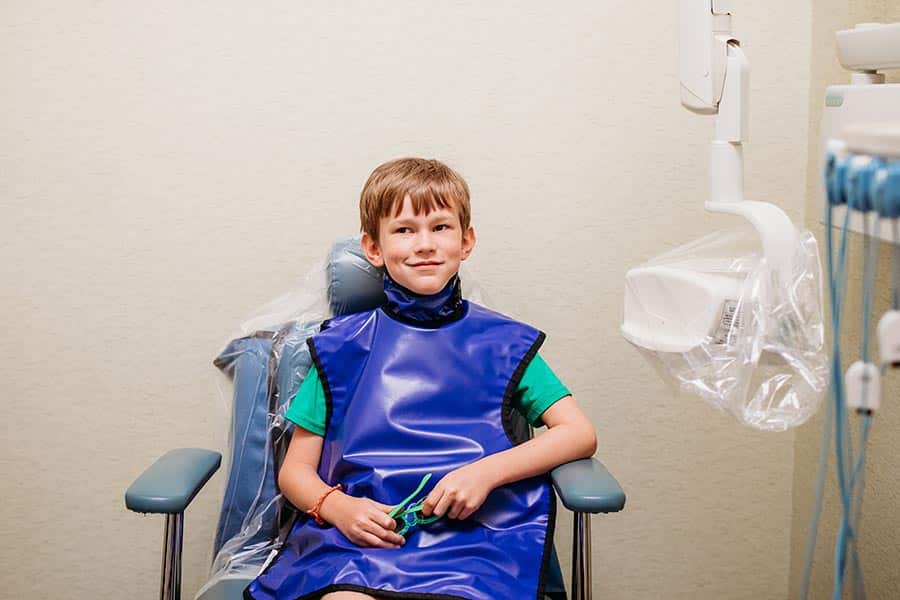
X-rays and other imaging tools help pediatric dentists diagnose decay, congenital anomalies, unique conditions, plan orthodontic treatment, and get a full picture of your child’s dental growth and development. While you might think they just find cavities, X-rays and radiographs give your child’s dentists a deeper look at any problems they wouldn’t see during routine cleanings.

Nutritional counseling
Receiving nutritional education for children is as important as learning proper brushing and flossing habits. We want all our patients and their families to understand how their nutritional choices affect their teeth and gums. We offer this information in a non-judgmental conversation about best practices for keeping your child’s teeth strong and healthy.

Emergency pediatric dentistry
Children sometimes require immediate care for toothaches, chipped teeth, and other emergencies. If an emergency occurs, call us right away so we can give your child the attention they need. Our knowledgeable team can also provide you with support and information about how to help your child until they can get to the office.

Anticipatory guidance
Anticipatory guidance includes cavity prevention, oral hygiene habits, dietary information, oral development milestones, injury prevention, and more! Proper anticipatory guidance can help you navigate the physical and emotional processes your child may experience at moments in their dental development.
Schedule a visit to Clifton & Mauney in Chapel Hill
The benefits of early pediatric dental visits
It’s never too early to start prioritizing your child’s dental health. Early pediatric dental visits offer a number of significant benefits that lay the groundwork for a lifetime of healthy smiles. By introducing children to the dental office environment at a young age, parents can help them become more comfortable and familiar with dental care procedures. This helps reduce anxiety and fear, making future dental visits less daunting for both the child and the parent.
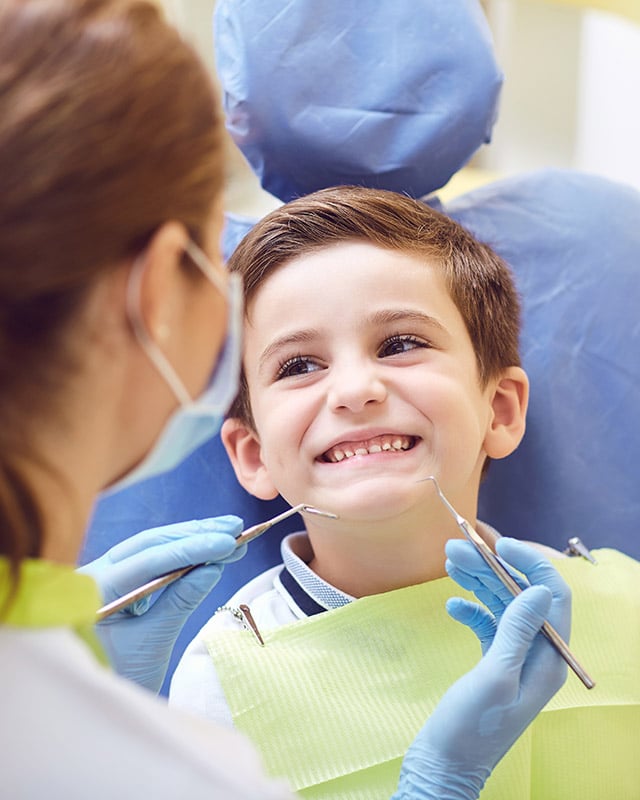
Here are some benefits of early pediatric dental visits:
- Prevention of tooth decay: Early visits allow the dentist to catch and address any signs of tooth decay before they become serious problems.
- Education on proper oral hygiene: Dentists provide invaluable guidance on how to care for your child’s teeth and gums at home.
- Early detection of orthodontic concerns: Regular check-ups help identify any potential issues early, which can be easier and less expensive to address.
- Habituation to dental procedures: Children become accustomed to routine dental procedures and exams, reducing their overall fear and apprehension.
- Dietary advice: Dentists can give practical advice on healthy eating habits that promote strong teeth and gums.
- Establishing a dental home: Finding a consistent dental home early on ensures continuity of care and builds a trusting relationship between the child and the dentist.
In addition to these benefits, early pediatric dental visits also play a crucial role in promoting overall health and well-being. Poor dental health has been linked to various systemic diseases and can have long-term effects on a child’s physical, social, and psychological development. By prioritizing your child’s dental care from an early age, you are setting them up for a healthier future.
Watch our Video Testimonials!
Serving Chapel Hill, Durham, and Hillsborough
Our Chapel Hill office welcomes families from across the Triangle, including Durham and Hillsborough. We’re located at 77 Vilcom Center Dr., Suite 310, near I-40, US 15-501, and Martin Luther King Jr. Blvd., making coordinated pediatric dental and orthodontic visits convenient for many local families.
Pediatric Dentistry FAQ
A toothbrush with soft bristles and a small head, especially one designed for infants, is the best choice for infants. Brushing at least twice a day will remove plaque bacteria that can lead to decay.
“First visit by first birthday” is the general rule. To prevent dental problems, your child should see your Chapel Hill pediatric dentist when the first tooth appears. This is usually between 6 and 12 months of age, but certainly no later than his/her first birthday.
Pediatric dentistry is a dental specialty that focuses on the oral health of young people. Following dental school, a pediatric dentist has two to three years of additional specialty training in the unique needs of infants, children, and adolescents, including those with special health needs. Ultimately, a pediatric dental specialist is better-suited to ensure your child’s healthy dental development – so we always recommend taking your child to a qualified pediatric dentist.
Baby bottle tooth decay is a pattern of rapid decay associated with prolonged nursing. It happens when a child goes to sleep while breastfeeding and/or bottle-feeding. During sleep, the flow of saliva is reduced, and the natural self-cleansing action of the mouth is diminished. To prevent baby bottle decay, avoid nursing children to sleep or putting anything other than water in their bedtime bottle. Encourage your child to drink from a cup as they approach their first birthday. He/she should be weaned from the bottle at 12-14 months of age.
Thumb and pacifier-sucking habits that go on for a long period of time can create crowded, crooked teeth or bite problems. If they are still sucking their thumbs or fingers when the permanent teeth arrive, a mouth appliance may be recommended by your Chapel Hill orthodontist. Most children stop these habits on their own.
Pediatric dental sealants are clear or tooth-colored coatings applied to the teeth to help keep them cavity-free. Sealants fill in the grooved and pitted surfaces of the teeth, which are hard to clean, and shut out food particles that could get caught, causing cavities. Fast and comfortable to apply, sealants can effectively protect teeth for many years.
You should use fluoridated toothpaste and a soft-bristled toothbrush as soon as you start brushing your child’s teeth. After age 3, parents should closely supervise brushing. Use no more than a pea-sized amount of toothpaste and make sure children do not swallow excess toothpaste.
To comfort your child, rinse his/her mouth with warm salt water and apply a cold compress or ice wrapped in a cloth to your child’s face if it is swollen. While you should not put heat or aspirin on the sore area, you may give the child acetaminophen for pain. In any case, make an appointment with us as soon as possible.
Fluoride has been shown to dramatically decrease a person’s chances of getting cavities by making teeth stronger. Fluoride in tap water is the best and easiest way to get it.
With contemporary safeguards, such as lead aprons and digital film, the amount of radiation received in a dental X-ray examination is extremely low. Even though there is almost no risk, pediatric dentists are particularly careful to minimize the exposure of child patients to radiation. In fact, dental X-rays represent a far smaller risk than an undetected and untreated dental problem.
A mouthguard should be a top priority on your child’s list of sports equipment. Athletic mouth protectors, or mouthguards, are made of soft plastic and fit comfortably to the shape of the upper teeth. They protect a child’s teeth, lips, cheeks, and gums from sports-related injuries. Any mouthguard works better than no mouthguard, but a custom-fitted mouthguard fitted by your Chapel Hill dentist is your child’s best protection against sports-related injuries.
At about 6 months, the two lower front teeth (central incisors) will erupt, followed shortly by the two upper central incisors. The remainder of the baby teeth appear during the next 18 to 24 months, but not necessarily in an orderly sequence from front to back. At 2 to 3 years, all 20 primary teeth should be present.
First of all, remain calm. If possible, find the tooth and hold it by the crown rather than the root. Replace the tooth in the socket and hold it there with clean gauze or a washcloth. If you can’t put the tooth back in the socket, place the tooth in a clean container with milk or salt water and take your child and the glass immediately to the pediatric dentist. The faster you act, the better your chances of saving the tooth.
Sore gums when teeth erupt are part of the normal eruption process. The discomfort is eased for some children by use of a teething biscuit, a piece of toast, or a frozen teething ring. Your pharmacy should also have medications that can be rubbed on the gums to reduce the discomfort.
Usually, the space will close in the next few years as the other front teeth erupt. One great benefit of our pediatric services is that our orthodontist, Dr. Clifton, is always on hand to take a courtesy peek during a regular appointment. If she does see any cause for concern, we’ll schedule a complimentary orthodontic consultation for you to discuss early intervention options such as braces or a clear aligner system like Invisalign.
Primary, or “baby,” teeth are important for many reasons. Not only do they help children speak clearly and chew naturally, but they also aid in forming a path that permanent teeth can follow when they are ready to erupt. Some of them are necessary until a child is 12 years old or older. Pain, infection of the gums and jaws, impairment of general health, and premature loss of teeth are just a few of the problems that can happen when baby teeth are neglected. Also, because tooth decay is really an infection and will spread, decay in baby teeth can cause decay in permanent teeth. Proper care of baby teeth is instrumental in enhancing the health of your child.
Four things are necessary for cavities to form: a tooth, bacteria, sugars or other carbohydrates, and time. Dental plaque is a thin, sticky, colorless deposit of bacteria that constantly forms on everyone’s teeth. When you eat, the sugars in your food cause the bacteria in plaque to produce acids that attack the tooth enamel. With time and repeated acid attacks, the enamel breaks down, and a cavity forms.
Contact your Chapel Hill pediatric dentist
We hope you found this page helpful, and if you still have questions about your child’s dental health, we’re always happy to answer them. Feel free to reach out to us to ask any questions you may have or to schedule an appointment at our Chapel Hill, NC, pediatric dentist’s office. We look forward to hearing from you, and we’re excited to help your child develop a healthy smile.