Getting your child to brush their teeth can feel like an uphill battle. Many parents struggle with kids who resist brushing, rush through it, or flat-out refuse. However, good oral hygiene habits start early. Try making brushing a fun and consistent part of their routine, modeling good habits for them, or using a rewards chart. Helping your toddler be more in control by teaching them how much toothpaste to use or how to use an electric toothbrush can get them more excited about being a big kid who knows how to brush their teeth.
- Healthy oral hygiene habits start early: Brush twice a day for two minutes and floss between touching teeth.
- Use the right amount of toothpaste. Children under 2 only need a smear the size of a rice grain on their brush. Toddlers 2–6 should use a pea-sized amount.1
- Let them lead, but most children will need hands-on help or close supervision until they’re at least 7. This is a great time to brush teeth together.
- The right-sized toothbrush can be more comfortable and reduce resistance. Choose the right bristle softness and consider an electric toothbrush if it makes the habit more fun.
How much toothpaste should my child use, and how long should they brush?
Toddler teeth should be brushed for at least two minutes.1 Let them practice first so they can get into the habit, then brush them yourself to ensure their teeth are clean.
Small children do not need a lot of toothpaste when brushing. If they’re under 2, they only need a rice-sized smear. If they’re 2 or older, a pea-sized drop on their brush is the right amount.1
What kind of toothbrush should my child use?
Start with a soft-bristled, child-sized toothbrush. A small toothbrush head is easier to move around a little mouth. Manual and electric toothbrushes can both work well, so the right choice is the one your child accepts and you can use thoroughly.
Many kids find electric toothbrushes, such as Sonicare or Oral-B, more exciting than manual ones. The vibrations and built-in timers can make brushing easier and more effective. Plus, it takes some of the work off their hands, ensuring a more thorough clean.
Whether you use a manual or electric brush, it will need to be changed regularly. Swap out a whole manual brush or the head of an electric toothbrush every three months or whenever the bristles look worn.
When can kids brush their own teeth?
Your kiddo will do a lot of growing up before they’re fully ready to brush their teeth on their own. The American Association of Pediatric Dentistry advises that kids may not be ready to brush independently until age 7 or 8.1 Until then, let them brush first so they can feel accomplished and learn the habit before following up with the brush yourself.
Kids need to have the dexterity to brush all teeth and the ability to reliably spit out toothpaste before letting them brush on their own. Every child is different, and you can always talk to their pediatric dentist about their habits and what you notice at home if you think they need help for longer or if they’re ready to go early.
Tips to get a toddler to brush their teeth
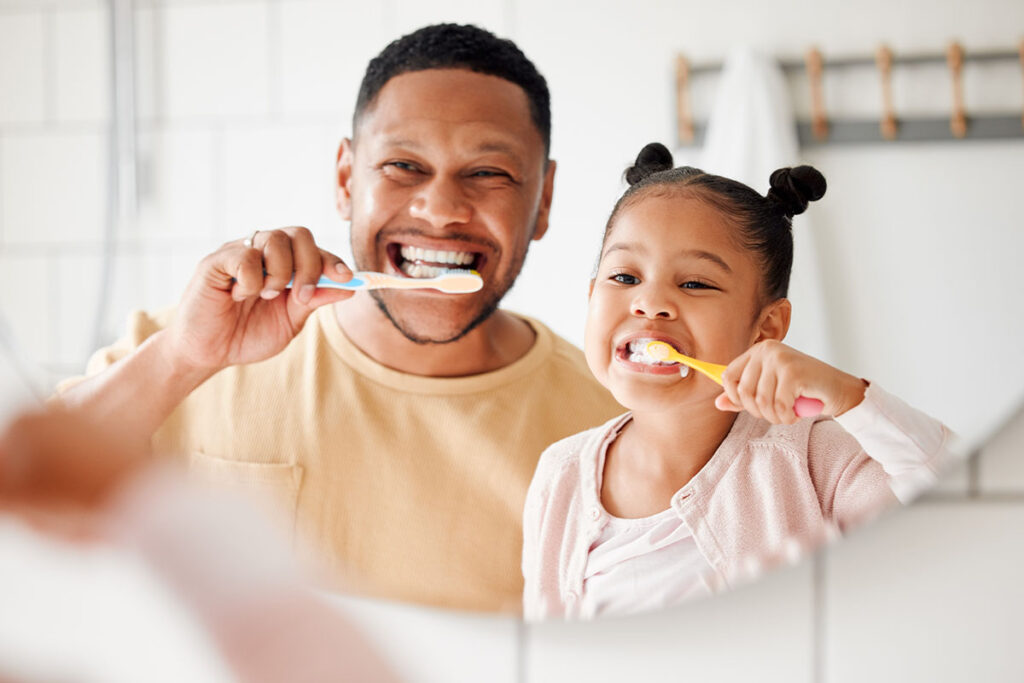
Let them see you brush and floss. Kids learn by watching. Brush together in front of the mirror so toothbrushing feels like part of the family routine.
Make brushing a game. Keep it simple enough to repeat: play a two-minute song, use a brushing app, count teeth together, or let your child choose which side to brush first. A familiar little challenge often works better than inventing a new distraction every night.
Use a toothbrushing chart and small rewards. A sticker or star after each morning and evening brushing gives a toddler something concrete to see. After a full week, choose a small reward such as an extra bedtime story or a family outing. Keep the reward focused on consistency, not perfect cooperation.
Consider an electric toothbrush. For some kids, the vibration and timer can make brushing more interesting and may help them with the routine. A soft manual brush is the better choice if sound or vibration adds stress for your child.
Toddlers may close their mouths, turn away, or protest because they want control, are tired, or dislike the taste, texture, or vibration. Stay calm and consistent, and change one part of the routine at a time so you can recognize what helps and what’s just getting in the way.
What if my child refuses to brush entirely?
If your child outright refuses to brush their teeth, it’s time for a new approach. Don’t skip brushing, but try out some new choices. They may be refusing because they want to be in control, they’re overstimulated by brushing, or there’s something that you can’t quite understand yet.
Offer some new options to your toddler, like:
- A new, milder flavor of toothpaste
- A different brush color
- Brushing in your lap instead of standing at the sink
- Which teeth get brushed first
You can also try switching to a different time of day to see if it’s less upsetting for your child.
If your child continues to refuse or if it seems like they’re in pain, gagging, or overly stressed out, talk to their pediatric dentist. They can make sure there’s nothing that needs to be addressed. Pediatric dentistry guidance can also help you with personalized tips for brushing toddler teeth without the tantrums.
Frequently asked questions
Use a rice-sized smear for children under 2. Use a pea-sized amount for children over 2.
Brush for two minutes twice a day. Parents should always finish brushing their teeth until kids can brush independently.
The AAPD advises that most kids will need help or monitoring when brushing their teeth until they are 7–8.
Pediatric dental services at Clifton & Mauney
Establishing good oral hygiene early is essential for lifelong dental health, and at Clifton & Mauney, we’re committed to helping your child build healthy habits that last a lifetime.
Our pediatric dental services are designed to meet the unique needs of children, including:
- Preventive care and cleanings: Regular check-ups and professional cleanings to keep your child’s smile bright and healthy.
- Cavity prevention and treatment: We focus on preventing cavities through fluoride treatments, sealants, and education, but we’re also here to provide gentle, effective treatment if they do occur.
- Orthodontic evaluations: Early screenings to identify potential alignment issues and plan for future orthodontic needs.
- Child-friendly dental education: Teaching kids the importance of brushing, flossing, and maintaining a healthy diet in a way they can understand and enjoy.
- Sensory-considerate experiences: Our team is trained to work with children who have sensory sensitivities, making their dental visit as comfortable and stress-free as possible.
We strive to create a comfortable, welcoming environment where kids feel safe and even excited about visiting the dentist. Our team is specially trained to work with children, from those who are nervous about their first visit to those with specific oral health needs. If your child is having trouble brushing, experiencing tooth pain, or you simply have questions about their dental development, we’re here to provide guidance and care every step of the way.